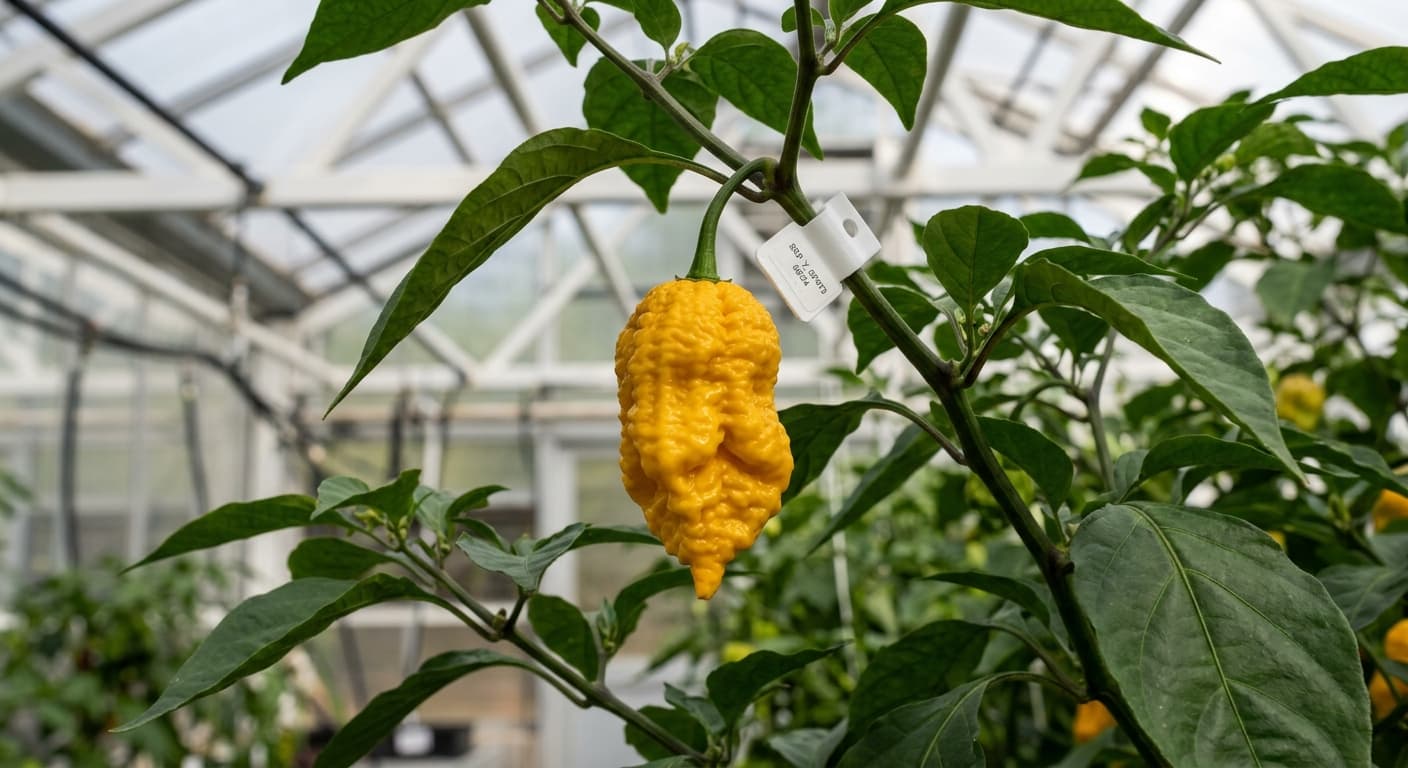
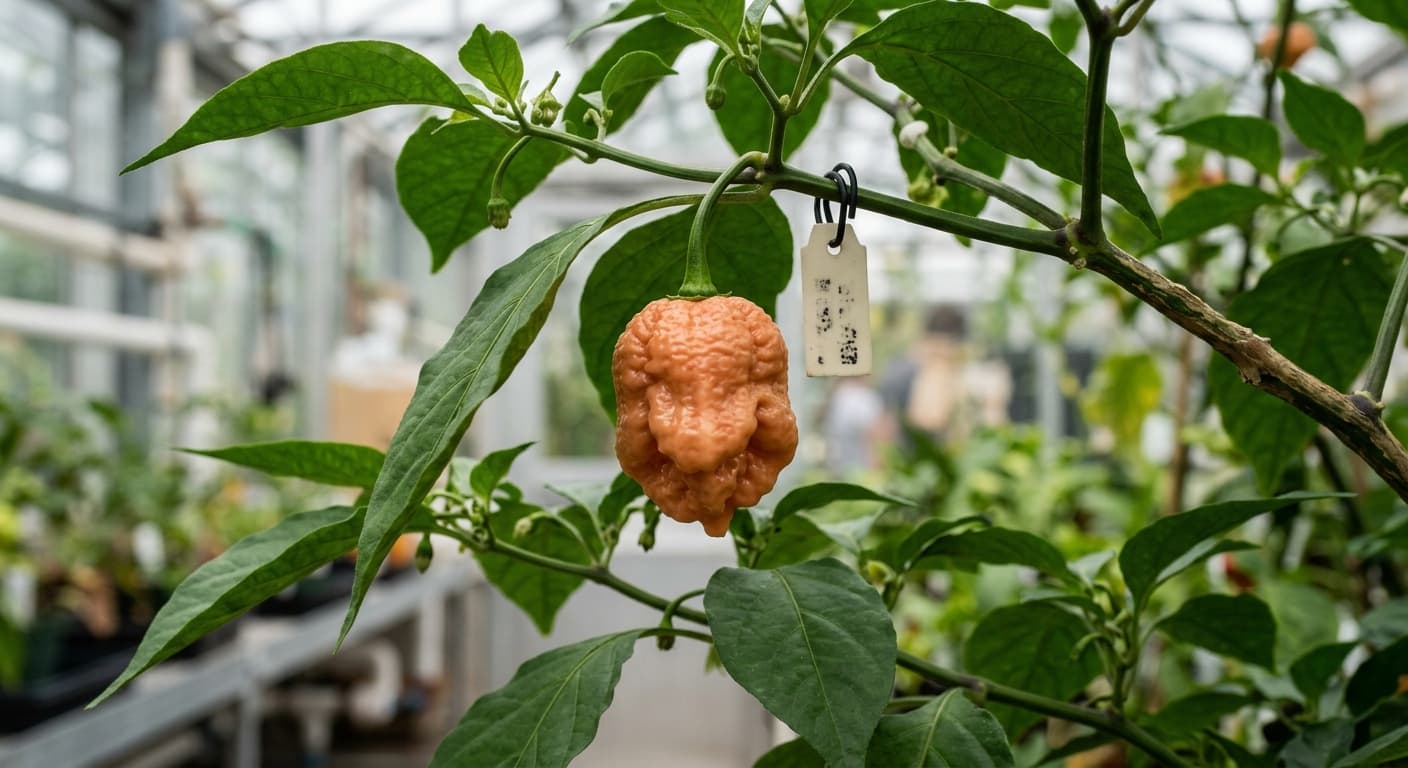
Containment Breach
C. chinense · Heat Ladder: Containment Breach
Scoville Heat Units
1,612,512
10.1% of pure capsaicin
This is a computed design target (10.1% of pure-capsaicin concentration), derived from the flux model and blend chemistry — not a measured value. It sits within concentrations measured in real peppers. See the evidence behind it:
Genes
9
Construct
14,655 bp
Variant
Triple
Promoter
2A11
Technical Manifest
Construct Type
T-DNA binary vector
Selection Marker
nptII (kanamycin resistance)
Codon Optimization
pepper
Capsaicinoid Profile
extreme multi
Gene Cassettes (9)
Construct map
14,655 bp · T-DNA binary vectorBurn Profile
Heat Ladder: Containment Breach
Capsaicinoid blend: extreme multi
Specimen library
Organism documentation
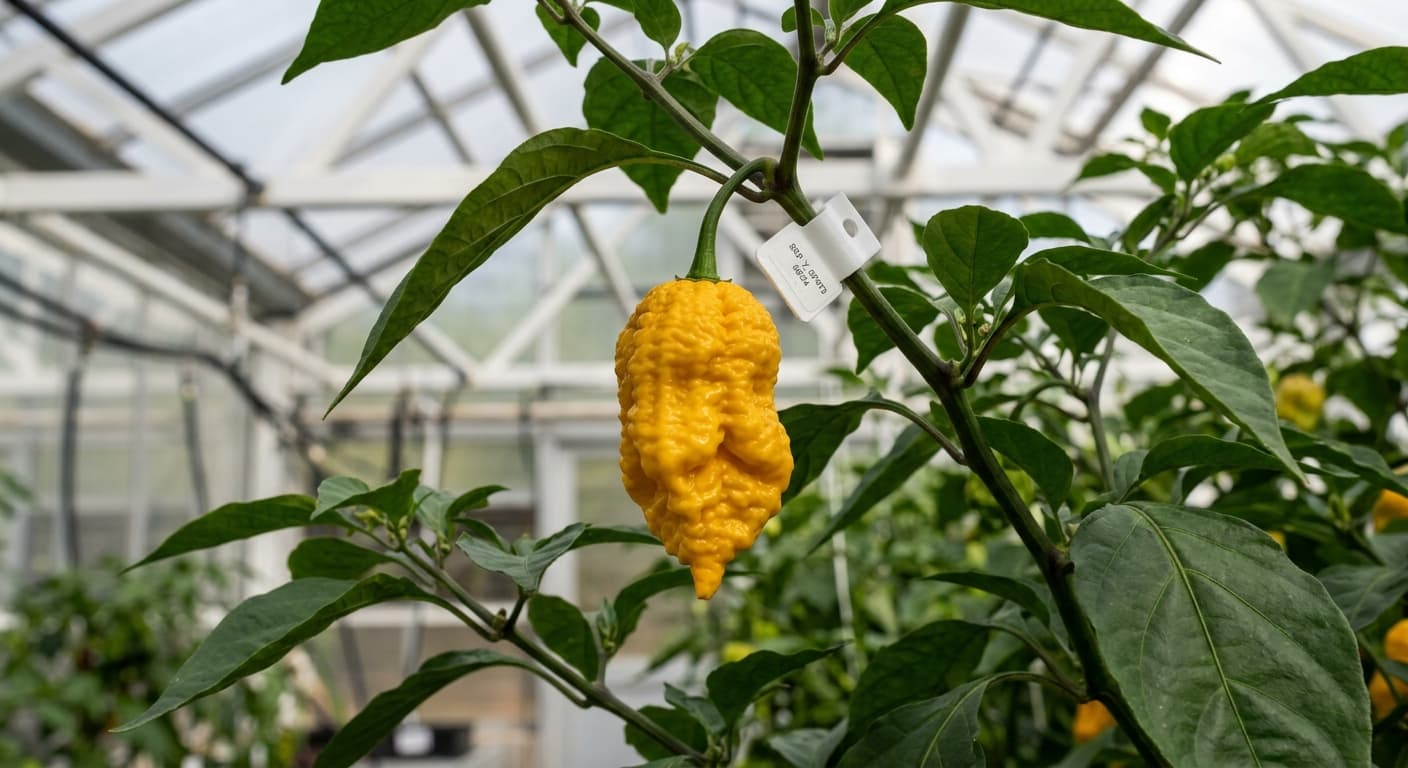
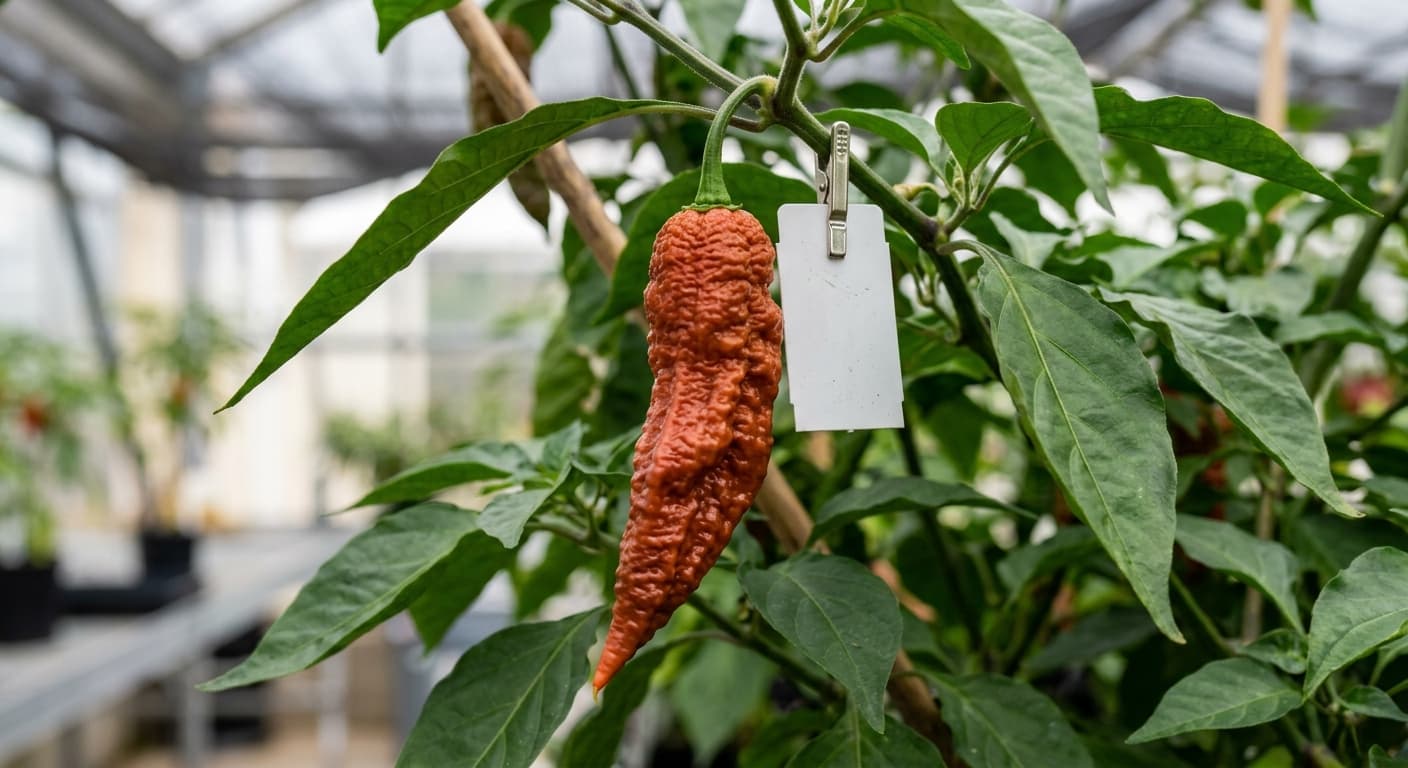
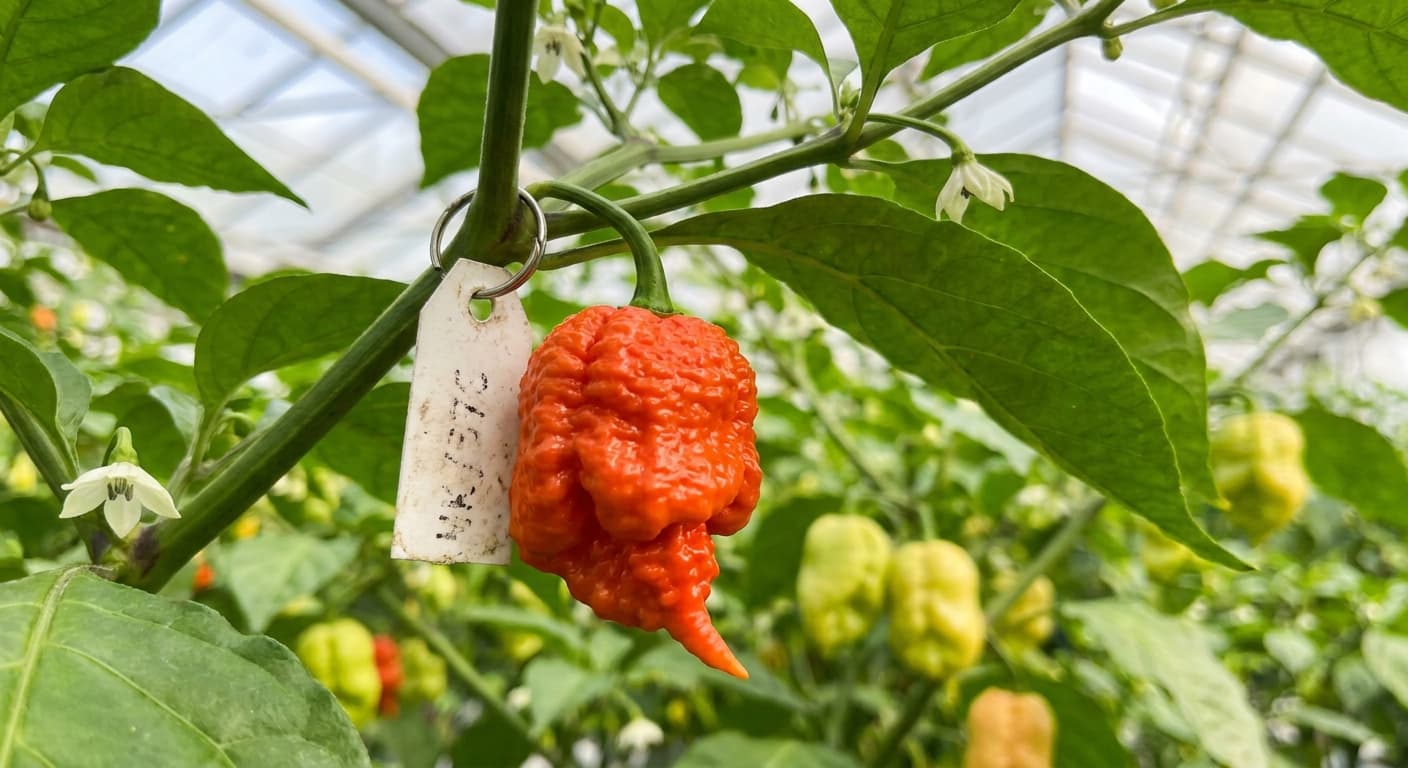
On-plant
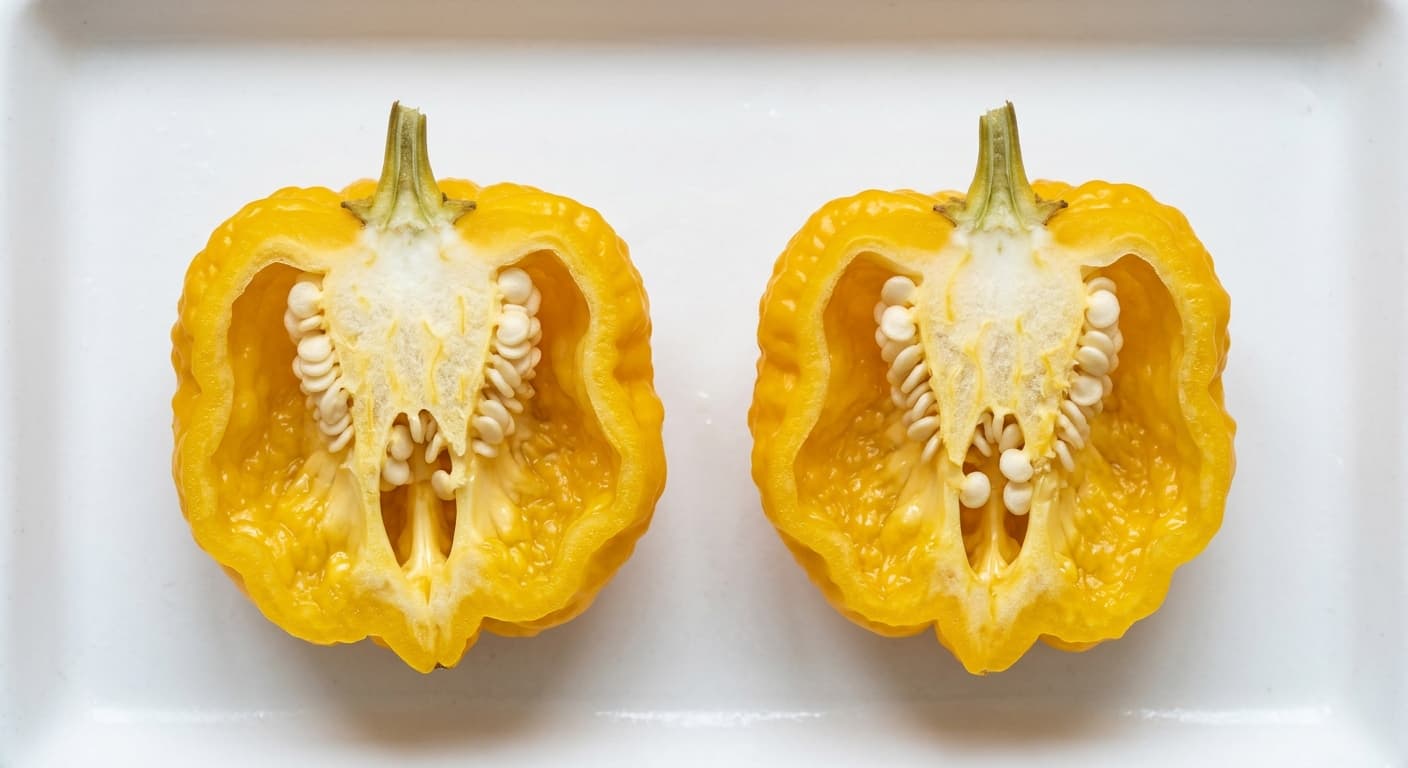
Cross-section
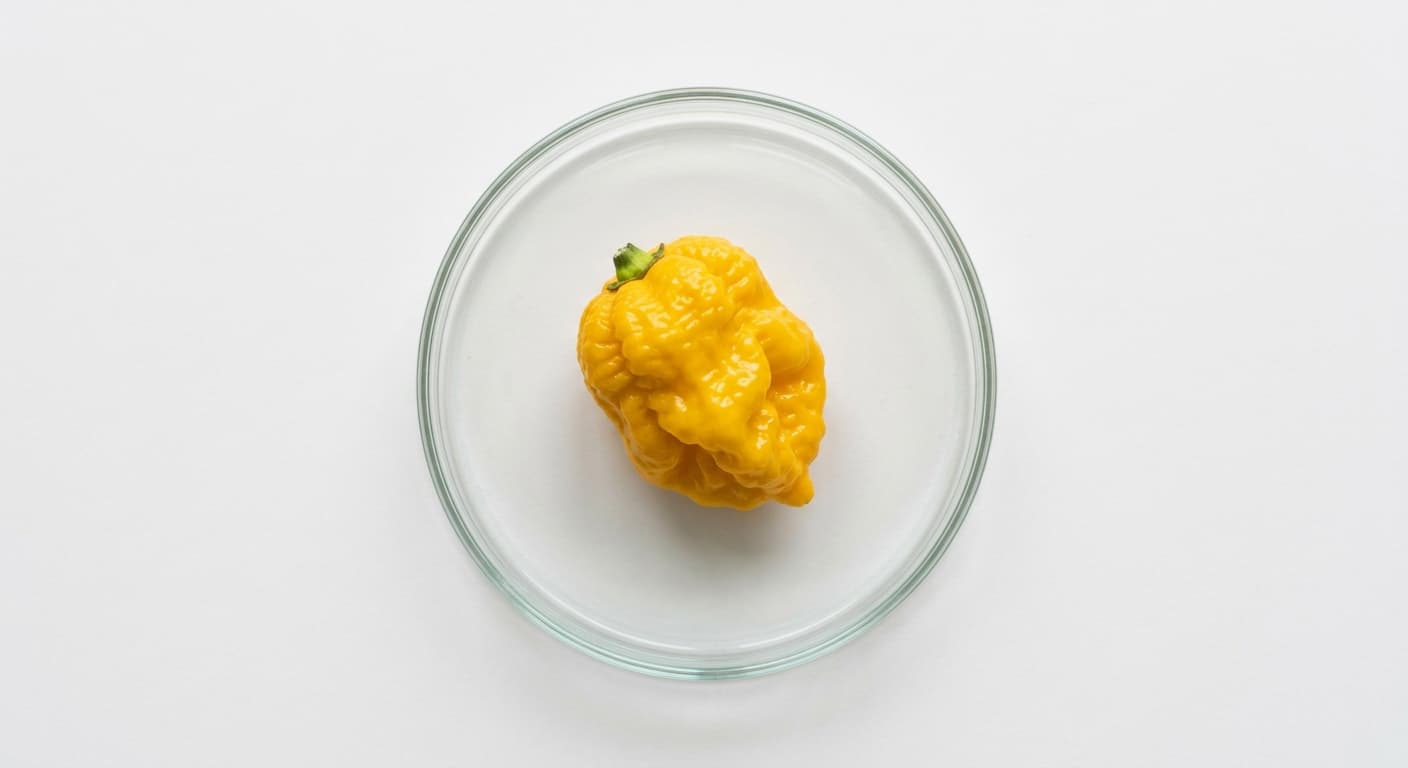
Clinical specimen
Download
This is one of our 10 founding pepper constructs — the proof of concept for the entire Scoville Splice platform. The full package is yours: academic paper, FASTA construct, datasheet, manifest, FBA predictions, CRISPR guides, and quick-start protocol.
Common questions
What is the target SHU of Containment Breach?
Containment Breach is engineered to a target of 1,612,512 Scoville Heat Units. Burn character: Heat Ladder: Containment Breach. Capsaicinoid profile: extreme multi.
What host organism does Containment Breach use?
Containment Breach is a Pepper cultivar in the Heat Ladder series, built on Pepper (C. chinense). The construct runs 9 genes across 14,655 base pairs, driven by the 2A11 promoter system.
What license tiers are available for Containment Breach?
Every catalog cultivar can be licensed at Specimen (one SKU, non-exclusive) or Sector (industry-sector exclusive) tiers. Genome and Platform licensing are available on request for category or stack-wide deals. See the licensing page for pricing structure.
What is included in the Containment Breach download package?
The Containment Breach bundle contains the full construct FASTA, a JSON manifest (gene list, promoter stack, codon-optimization notes), the FBA predictions, computationally designed CRISPR guide RNAs, the datasheet, a short product paper, and a signed ZIP for provenance.
Related products
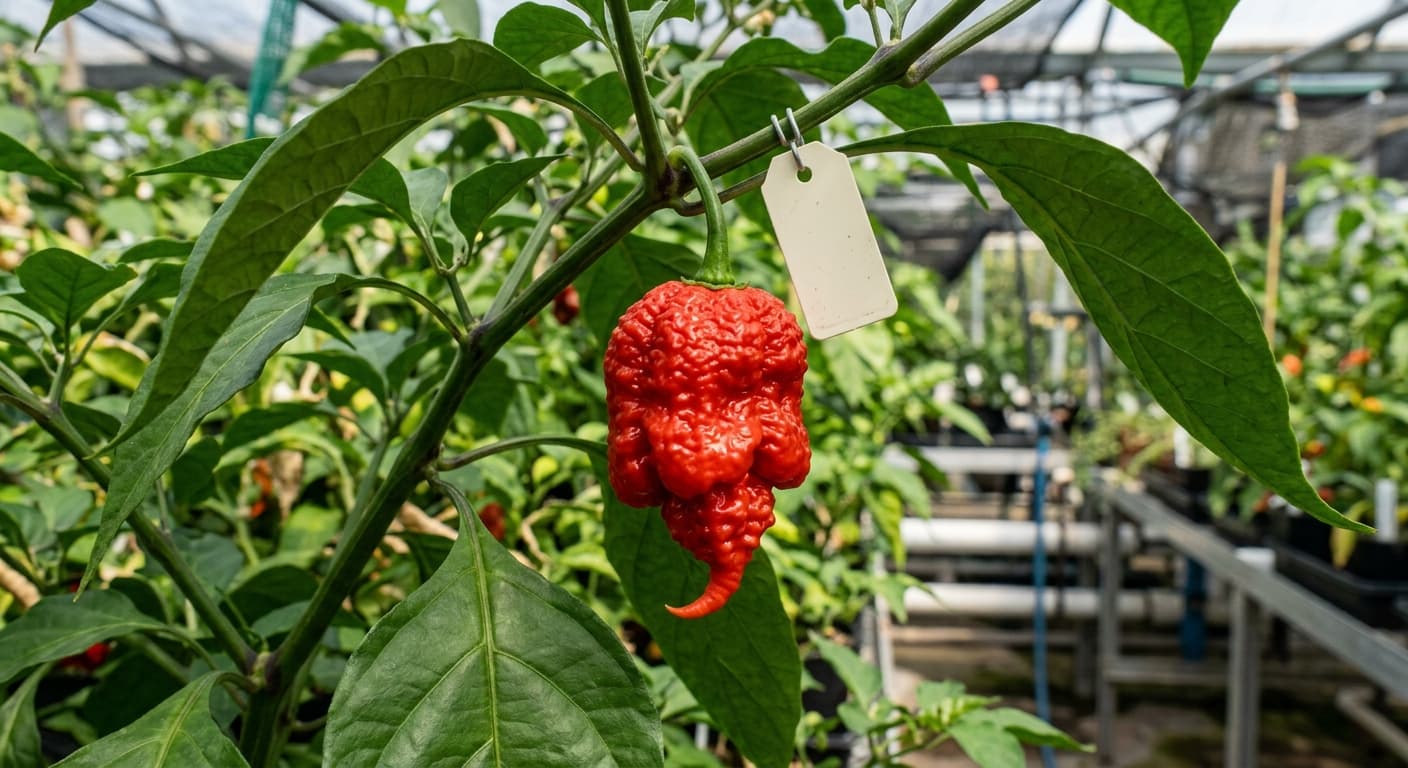
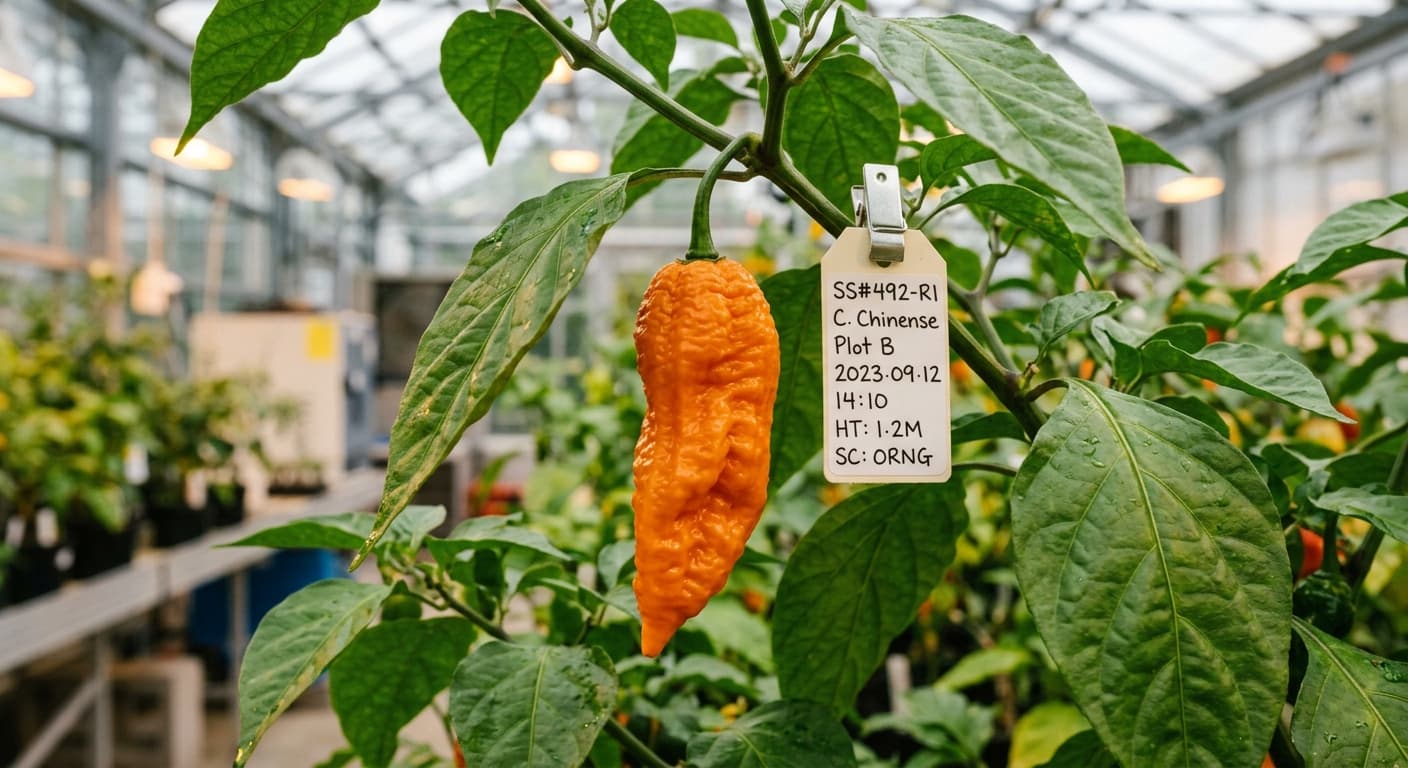
Related reading
From the Scoville Splice journal
Article
What is a Scoville Unit?
The 1912 taste test that became a biosensor benchmark — and why it still gates every pepper we ship.
Read →
Article
What is the hottest pepper?
From Carolina Reaper to Pepper X — the current record holders, and where the Scoville ladder goes next.
Read →
Article
How we design a cultivar
A guided tour of the Scoville Splice pipeline: target SHU, gene cassette, assembly, QA, release.
Read →
Often licensed together
All 10 in series →